I am a chosen prophet by the Lord Jesus. I speak Chinese and Minnan as my first language. And, I speak English as my second language. I am a C1 user of the TOEIC and TOEFL-ITP's grammar. My TOEIC is 920 and TOEFL-ITP 617. And, my Structure & Written Expression of my TOEFL-ITP is 66 out of 68.
Sunday, July 14, 2013
Egyptian army vow to calm situation in Sinai soon - 0715-2013-(Mon.)
Fighting continues in the peninsula as gunfire raises tensions along Egyptian-Israeli border.
An Egyptian military spokesman said on Sunday that the army will not allow any harm to national security and that the situation in Sinai will be settled shortly, according to a report by the Egyptian State Information Service.
Colonel Ahmed Ali said in a statement to Sky News, “The Egyptian army will not allow any harm to national security and the Egyptian army has the potential, capacity and information to resolve the situation in the right time.”
On Sunday evening, the IDF declared a state of alert in areas near the Israel-Egypt border, and residents were told to stay in their homes as tensions have increased because of the fighting on the Egyptian side, according to Israel Radio. No casualties have been reported on the Israeli side of the border.
Meanwhile, the Egyptian State Information Service also reported on Sunday that the army has killed 37 terrorists and wounded 42 so far in their security operation in the Sinai.
Unidentified gunmen attacked four army and police checkpoints in Rafah and Arish while gunmen fired at an army checkpoint in front of the Rafah municipal council using RPG launchers and attacked Sukkar, Al-Mahager, and Al Matar checkpoints on Al- Arish ring road.
Two soldiers were injured in these attacks, according to the report.
Security sources said that the army exchanged fire with gunmen and that apache helicopters chased the fleeing gunmen into neighboring fields.
Morsi's removal fuels Islamist militancy in Sinai
By REUTERS15/07/2013
Egyptian army sources are playing down possibility of major operation in Sinai, as resources are stretched thin; such an operation will also need Israeli approval, as a part of the peace treaty between the two countries.
CAIRO/ISMAILIA, Egypt - Within hours of Egypt's elected president being overthrown this month, militant fellow Islamists in the Sinai peninsula were talking of making war on Cairo's security forces.
Scarcely had a video surfaced on YouTube of hundreds of men chanting "No to peace!", than police and troops were attacked in El Arish and other North Sinai towns. Thirteen have now been killed across the province since Mohamed Morsi was toppled on July 3.
The desert peninsula has long been a security headache for Egypt and its neighbors. Large and empty, it borders Israel and the Gaza Strip and flanks the Suez Canal linking Asia to Europe. It is also home to nomad clans disaffected with rule from Cairo.
By adding to anger and seeming to confirm low expectations of democracy among Islamist militants who viewed Morsi and his Muslim Brotherhood as too moderate, the president's removal by the army has brought new violence to Sinai. It may presage more, if the fiery rhetoric of various hardline groups is any guide.
Egypt's armed forces are on high alert, though military sources play down talk of a major offensive. Such an operation might require Israeli approval - due to their 1979 peace treaty. And some experts say the Egyptian army is less than ideally equipped and trained for a counter-insurgency drive.
Despite banner headlines in a state-run newspaper this weekend declaring a new assault on Sinai militants in the coming days, army sources are playing down the possibility of a major operation in the near term. Resources are already stretched.
The sources, speaking on condition of anonymity because they are not authorized to brief journalists on the sensitive issue, said troops in Sinai were already on heightened alert.
If the army were to want to be more assertive, it might need to re-equip. The Abrams tanks and F-16 fighter jets it buys with $1.3 billion in annual US military aid are not ideal for fighting small groups of international jihadist militants and their local Bedouin allies in remote, rugged terrain.
"We've long been urging them to change their procurement policies to give them the flexibility they need to tackle counter terror in Sinai," said Robert Springborg, who studies the Egyptian military at the US Naval Postgraduate School.
Israeli approval
Under a US-brokered treaty that ended 15 years of Israeli occupation of Sinai in 1982, Israel has a say in whether Egypt can increase its forces in the largely demilitarized peninsula.
Since an increase in militant activity after the fall of Hosni Mubarak in 2011 - including trouble on Israel's border - the Jewish state has already given a green light.
"Egypt could bring in more forces now, with Israel's blessing," said Amos Yadlin, former chief of military intelligence and now head of the Institute for National Security Studies in Tel Aviv.
"That will be a sensible thing to do. And if they were to leave 30 tanks there, we could live with that."
Army sources estimate there are around 1,000 armed militants in Sinai, divided into different groups with varying ideologies. They are spread over a region twice the size of Belgium but with only half a million residents, concentrated in coastal resorts.
The attacks since Morsi's ouster may have risen in number, but they have been relatively small in scale so far, and may not, in themselves, unduly worry General Abdel Fattah al-Sisi, the head of the armed forces who removed Morsi from office.
But various factors are keeping his eyes on the peninsula, the army sources said: weapons are flowing in - some from Libya, some possibly from Gaza, long an importer of arms from Sinai's many smuggling networks; the civil war in Syria is swelling the ranks of international Islamist fighters; and the rhetoric of militant and Islamist groups is growing increasingly aggressive.
A major militant assault in Sinai like one last August which killed 16 Egyptian guards on the Israeli border could trigger a sterner military response, the sources said.
In one of the worst attacks in Egypt's history, more than 80 people were killed and 200 injured in 2005 when suspected car bombs rocked Sharm el-Sheikh, a Red Sea resort on Sinai's southern coast popular with international tourists.
Analysts warn of violence hitting "mainland Egypt", as the African bulk of the country west of the Suez Canal is sometimes known, with the anger being voiced by militants in Sinai shared more broadly among Islamists across the country.
"They will justify their attacks by casting the ousting of Morsi as an attack on Islam," said Khalil al-Anani, a senior fellow at Washington's Middle East Institute.
"It's not all about Sinai. The situation would also encourage many young angry Islamists to commit attacks in Cairo and Alexandria. There's the potential for this. Islamists now are very angry and disenchanted with what is happening."
SPENGLER
Islam's civil war moves to Egypt
By Spengler
The vicious crosswind ripping through Egyptian politics comes from the great Sunni-Shi'ite civil war now enveloping the Muslim world from the Hindu Kush to the Mediterranean.
It took just two days for the interim government installed last week by Egypt's military to announce that Saudi Arabia and other Gulf States would provide emergency financing for the bankrupt Egyptian state. Egypt may not yet have a prime minister, but it does not really need a prime minister. It has a finance minister, though, and it badly needs a finance minister, especially one with
a Rolodex in Riyadh.
As the World Bulletin website reported July 6:
"The Finance Ministry has intensified its contacts [with Gulf states] to stand on the volume of financial aid announced," caretaker Finance Minister Fayyad Abdel Moneim told the Anadolu Agency in a phone interview Saturday. Abdel Moneim spoke of contacts with Saudi Arabia, the United Arab Emirates (UAE), and Kuwait for urgent aid ... Defense Minister Abdel Fatah al-Sisi phoned Saudi Kind Abdullah bin Abdel Aziz and UAE President Sheikh Khalifa bin Zayed al-Nuhayyan yesterday on the latest developments in Egypt. King Abdullah was the first Arab and foreign leader to congratulate interim president Adly Mansour after his swearing-in ceremony. [1]
Meanwhile, Egypt's central bank governor, Hisham Ramez, was on a plane to Abu Dhabi July 7 "to drum up badly need financial support", the Financial Times reported. [2] The Saudis and the UAE had pledged, but not provided, US$8 billion in loans to Egypt, because the Saudi monarchy hates and fears the Muslim Brotherhood as its would-be grave-digger. With the brothers out of power, things might be different. The Saudi Gazette wrote July 6:
Egypt may be able to count on more aid from two other rich Gulf States. Egypt "is in a much better position now to receive aid from Saudi Arabia and the UAE", said Citigroup regional economist Farouk Soussa. "Both Saudi Arabia and the UAE have promised significant financial aid to Egypt. It is more likely that Egypt will receive it now." [3]
Media accounts ignored the big picture, and focused instead on the irrelevant figure of Mohamed al-Baradei, the Nobel Peace Prize winner whose appointment as prime minister in the interim government was first announced and then withdrawn on Saturday. It doesn't matter who sits in the Presidential Palace if the countryruns out of bread. Tiny Qatar had already expended a third of its foreign exchange reserves during the past year in loans to Egypt, which may explain why the eccentric emir was replaced in late June by his son. Only Saudi Arabia with its $630 billion of cash reserves has the wherewithal to bridge Egypt's $20 billion a year cash gap. With the country's energy supplies nearly exhausted and just two months' supply of imported wheat on hand, the victor in Cairo will be the Saudi party.
I predicted this development in a July 4 post at PJ Media, noting,
The Saudis have another reason to get involved in Egypt, and that is the situation in Syria. Saudi Arabia's intervention in the Syrian civil war, now guided by Prince Bandar, the new chief of Saudi Intelligence, has a double problem. The KSA wants to prevent Iran from turning Syria into a satrapy and fire base, but fears that the Sunni jihadists to whom it is sending anti-aircraft missiles eventually might turn against the monarchy. The same sort of blowback afflicted the kingdom after the 1980s Afghan war, in the person of Osama bin Laden.
Saudi Arabia and Qatar have been fighting for influence among Syria's Sunni rebels (as David Ottaway reported earlier this week at National Interest). Cutting off the Muslim Brotherhood at the knees in Egypt will help the KSA limit potential blowback in Syria." [4]
There wasn't before, there is not now, and there will not be in the future such a thing as democracy in Egypt. The now-humiliated Muslim Brotherhood is a Nazi-inspired totalitarian party carrying a crescent in place of a swastika. If Mohamed Morsi had remained in power, he would have turned Egypt into a North Korea on the Nile, a starvation state in which the ruling party rewards the quiescent with a few more calories.
The head of Egypt's armed forces, Field Marshal Abdel-Fatah al-Sisi, is not a democrat, but a dedicated Islamist whose wife is said to wear the full niqab body covering, according to Naval Postgraduate School professor Robert Springborg. "Islamic ideology penetrates Sisi's thinking about political and security matters," Springborg observes. [5]
The question is not whether Islamism, but whose. Some Saudi commentators claim al-Sisi as their Islamist, for example Asharq al-Awsat columnist Hussein Shobokshi, who wrote July 7, "God has endowed al-Sisi with the Egyptians' love. In fact, al-Sisi brought a true legitimacy to Egypt, which will open the door to hope after a period of pointlessness, immaturity and distress. Al-Sisi will go down in history and has gained the love of people." [6] The Saudi-funded Salafist (ultra-Islamist) Nour Party in Egypt backed the military coup, probably because it is Saudi-funded, while other Salafists took to the streets with the Muslim Brotherhood to oppose it. Again, none of this matters. The will of a people that cannot feed itself has little weight. Egypt is a banana republic without the bananas.
Whether Egypt slides into chaos or regains temporary stability under the military depends on what happens in the royal palace at Riyadh, not in Tahrir Square. It appears that the Saudis have embraced the military-backed government, whoever it turns out to include. It is conceivable that the Saudis vetoed the ascension of al-Baradei, hilariously described as a "liberal" in the major media. Al-Baradei is a slippery and unprincipled operator who did great damage to Western interests.
As head of the International Atomic Energy Agency until 2009, the Egyptian diplomat repeatedly intervened to distort his own inspectors' reports about the progress of Iran's nuclear program. In effect, he acted as an Iranian agent of influence.
The Saudis have more to fear from Iran than anyone else. Iran (asMichael Ledeen observes) is trying to subvert the Saudi regime through the Shi'ite minority in Eastern Province. If Riyadh did not blackball his nomination as prime minister, it should have.
There isn't going to be a war with Israel, as some commentatorshave offered. Israel is at worst a bystander and at best a de factoally of the Saudis. The Saudi Wahabists hate Israel, to be sure, and would be happy if the Jewish State and all its inhabitants vanished tomorrow. But Israel presents no threat at all to Riyadh, while Iran represents an existential threat.
The Saudis, we know from WikiLeaks, begged the United States to attack Iran, or to let Israel do so. The Egyptian military has no interest in losing another war with the Jewish state. It may not have enough diesel fuel to drive a division of tanks to the border.
The Saudi regime, to be sure, sponsors any number of extremist malefactors through its network of Wahabist mosques and madrassas. But the present Saudi intervention in Egypt - if I read the signals right - is far more consistent with American strategic interests than the sentimental meanderings of the Barack Obama administration, or the fetishism of parliamentary form that afflicts the Republican establishment.
The Saudi regime is an abomination by American standards, but the monarchy is a rational actor. As Michael Ledeen observed a year ago, "The big oil region in Saudi Arabia is in Shiite country, and the Saudi Shi'ites have little love for the royal family. If the rulers saw us moving against Tehran and Damascus, it would be easier for us to convince them to cut back their support for jihad outside the kingdom." [7]
The United States has less influence in the region than at any time since World War II, due to gross incompetence of the Obama administration as well as the Republican establishment. The Obama administration as well as Senators John McCain and Lindsey Graham courted the Muslim Brotherhood as a prospective vehicle for Muslim democracy, ignoring the catastrophic failure of the Egyptian economy as well as the totalitarian character of the Brotherhood.
Americans instinctively ask about any problem overseas, "Who are the good guys?" When told that there are no good guys, they go to see a different movie. There are no good guys in Egypt, except perhaps for the hapless democracy activists who draw on no social constituency and wield no power, and the endangered Coptic Christian minority. There are only forces that coincide with American interests for reasons of their own. It is a gauge of American foreign policy incompetence that the medieval Saudi monarchy is a better guardian of American interests in Egypt for the time being than the United States itself.
Erdogan: Morsi sole legitimate Egypt pres.
Mon Jul 15, 2013 2:3AM GMT
Turkish Prime Minister Recep Tayyip Erdogan has said that ousted leader Mohamed Morsi is the only legitimate president of Egypt.
Erdogan made the remarks on Sunday during an interview with Turkey’s English-language dailyToday's Zaman.
"Currently, my president in Egypt is Morsi because he was elected by the people," he stated. "If we don't judge the situation like that it is tantamount to ignoring the Egyptian people.”
On Saturday, several Egyptian MPs in the disbanded upper house of parliament also rejected the ouster of Morsi, the country's first democratically elected president, in a military coup.
Speaking at a public rally organized by the Muslim Brotherhood in Cairo, some two dozen members of the Shura Council demanded the army reinstate Morsi, and called on other legislatures across the world not to recognize Egypt’s new military-appointed administration.
They rejected the legality of any action taken following what they called a military coup d’état against the elected president -- including the dissolution of the parliament.
In a televised speech late on July 3 night, Egyptian army chief General Abdel Fattah al-Sisi announced that Morsi, a former leading member of the Muslim Brotherhood, was no longer in office and declared that the head of the Supreme Constitutional Court, Adly Mahmoud Mansour, had been appointed as the new interim president of Egypt. The army also suspended the constitution.
Army officials said ousted President Morsi, who took office in June 2012, was being held “preventively” by the military.
Egypt’s Real Disaster: Away from Political Turmoil, an Economy in Freefall
As interim Egyptian Prime Minister Hazem al-Beblawy works to fill out his fledgling Cabinet and return the country to something resembling normality, one of his most immediate challenges will be something he, in theory, should be perfectly qualified to handle.
Al-Bebalwy, a career economist and former Finance Minister, has assumed the reigns of a country in economic free fall. The value of the Egyptian pound has plummeted to record lows, foreign-currency reserves have dropped to less than half of the $36 billion held by the regime of former dictator Hosni Mubarakbefore he was ousted in February 2011. The budget deficit has climbed to more than 11% of the country’s GDP. Tourism, one of the anchors of Egypt’s foreign-currency cash flow, has never truly recovered from the 2011 revolution. Early signs from the beginning of 2013 showed a steady increase in the number of tourists over the previous two years. But many of those have been attracted by bargains offered by hotels slashing their prices to maintain occupancy numbers. And each new round of political unrest scares away another month or two of visitors.
The situation may actually be even worse than the metrics that define it. Former Minister of Supply Bassem Ouda, a Muslim Brotherhood member who resigned when former President Mohammed Morsi, a longtime Brotherhood official, was ousted by the military on July 3, warned last week that Egypt has less than two months’ supply of imported wheat left in its stocks — raising the prospect of a serious disruption in Egypt’s vital subsidized food structure.
The prospect of a wheat shortage is particularly disturbing. Egypt is the world’s largest net importer of wheat and a steady supply of affordable subsidized bread is a mainstay of the local diet. In the 1970s the late President Anwar Sadat attempted to raise the prices of subsidized bread; the result was several days of unprecedented protests and unrest that are now referred to as the bread riots.
Into this economic maelstrom steps al-Beblawy, 76; his appointment last week was almost universally praised by the international economic community.
“He’s very well known and well respected. And he’s a wise man,” said Ragui Assad an Egyptian-born professor of public policy at the University of Minnesota’s Humphrey School of Public Policy. Assad briefly worked alongside al-Beblawy at the Economic Research Forum, an Egyptian economic think tank, and the ERF’s director Ahmed Galal is currently one of the main contenders for the job of Finance Minister in the new government. “This could be one of the best cabinets we’ve seen in terms of the economic team in years. But obviously it’s not going to be a cabinet with a long-term mandate,” Assad said.
Al-Beblawy served briefly as Finance Minister in 2011 when the country was run by the Supreme Council of the Armed Forces. But he resigned in October of that year after just four months on the job in protest over a violent clash with the military that left 26 protesters — mostly Coptic Christians — dead. Al-Beblawy, a Muslim, said at the time that responsibility for the deaths “lies, ultimately, with the government.”
During his short tenure, al-Beblawy was primarily charged with negotiating with the International Monetary Fund over a $4.8 billion emergency aid package — a deal which still remains uncompleted two years later. Each new wave of political unrest has seemingly delayed the negotiations further and in December 2012 — in the midst of a national crisis over the constitution — Morsi’s government announced and then abruptly repealed a package of tax increases designed to appease the IMF.
Angus Blair, CEO of the Cairo-based economic think tank the Signet Institute, said he was originally skeptical of al-Beblawy two years ago but was quickly won over. “He’s a bit of a tiger. He’s young at heart, he knows Egypt’s problems, and he’s got the will to tackle them,” Blair says.
Much of al-Beblawy’s most immediate workload has centered on filling out his cabinet — a process that will likely involve as just as much speculation, leaks and rumors as the process that preceded his own appointment. Mohammed ElBaradei — who was himself poised to become Prime Minister before a sudden 11th-hour reversal last week — was sworn in Sunday as interim Vice President for International Affairs. Most of the rest of the cabinet lineup remains in flux, although Nabil Fahmy, former Egyptian ambassador to the U.S., did officially accept the post of Foreign Minister on Sunday.
Al-Beblawy appears to be beginning his tenure on a wave of goodwill — some of it based on his personal reputation and some just for the fact that he represents a fresh start after Morsi’s disastrous and divisive one-year reign.
“There’s already a positive vibe in some circles … but we do need to see some positive actions,” said Mohamed Abu Basha, an economist at the Egyptian investment bank EFG-Hermes. “In the very short term there’s little the government can do to change things. What they can quickly do is regain that [investor] confidence a little.”
Even before al-Beblawy was named Prime Minister, Egypt received a much-needed boost in the form of a combined $12 billion in loans and gifts from Saudi Arabia, Kuwait and the United Arab Emirates — all of them eager to replace Qatar as Egypt’s primary petro-patron. But Abu Basha said the IMF loan still remains a critical goal because it represents a crucial international green light for Western governments and investors to pump in further aid and investment.
While easing the sense of economic emergency and buying Beblawy some room to maneuver, the new wave of Gulf money represents a temporary reprieve, not a long-term solution. Abu Basha estimated that Egypt will require as much as $35 billion to stay afloat over the next two years. “It’s a decent amount of money but it’s maybe a third of what Egypt will need,” he said.
Al-Beblawi is going to be counting on all of that goodwill and confidence going forward since one of the first items on his economic agenda involves some painful steps that successive Egyptian governments — dating back to Mubarak — have consistently avoided. For years economists have pointed to Egypt’s massive public-subsides budget — for both cheap fuel and basic food staples — as a mountain that simply had to be climbed in order to modernize the Egyptian economy. Assad estimated that the government spends up to $15 billion per year on providing gasoline to its citizens at well below international prices.
“That’s just insane when you have this level of budget deficit,” he said. “There’s no way they’re going to solve the budget without tackling energy subsides. But that requires a somewhat credible Cabinet and government to do that.” Such potentially unpopular austerity measure require broad political consensus as a cover. Morsi never managed to create this kind of consensus — his critics deride his tenure as one where he sought to consolidate Islamist political power rather than build national unity.
Ironically, by alienating vast swaths of the country during a single year in office, Morsi, who remains detained by the military in an undisclosed location, might have paved the way for a new regime to institute galvanizing reforms. But with Egypt’s economic and political life still tied to its volatile street, the hard work has just begun.
Gunmen from the Ezzedine al-Qassam Brigades, the armed wing of Hamas.. Photo Credit: Abed Rahim Khatib / Flash 90
Egypt’s de facto interim military regime has attacked Hamas terrorists in the Sinai, killing more than 30 and placing approximately 200 others under arrest, according to the often reliable London-based Arabic-language al-Hayat newspaper
It quoted an Egyptian security official as admitting that the military is far from controlling the virtual anarchy that has reigned in the Sinai since the beginning of the revolutionary movement against the regime of Hosni Mubarak.
Even though the Muslim Brotherhood founded the Hamas movement as an offspring, the ousted government of Mohammed Morsi was wary of Hamas, which is rivaled by other Islamic terrorist groups who are dead-set on creating chaos in Egypt as well as in Israel.
Dozens of terrorists from the Muslim Brotherhood movement, incensed by the military ouster of Morsi and the subsequent massacre of dozens of Muslim Brotherhood supports, have joined Hamas terrorists in the Sinai.
"They enter Sinai through the tunnels to carry out attacks, along with others, and then return to Gaza through the tunnels. They take advantage of the surface and hide in the mountains,” he was quoted as saying.
Terrorist in the Sinai have frequently attacked Egyptian soldiers, killing more than dozen in one onslaught and kidnapping seven others as recently as last May.
The ouster of the Muslim Brotherhood is, so far, the best of both worlds for Israel. Still hated by most Egyptian leaders as well as the people, Israel can rely on a more stable government, democratically elected or not, than the Morsi regime that was running the country into the ground and creating a fertile ground for terrorists to exploit a vacuum of political strength.
Israel now has an undeclared ally against Hamas and is allowing Cairo to deploy heavy arms in the Sinai, a move which requires Israel approval as outlined in the Egyptian-Israeli peace treaty of 1979.
TIME quoted Washington Institute for Near East Policy David Makovsky on Thursday as saying, “Israel sees the Egyptian military as a pro-peace lobby inside the Egyptian political system.”
There is one big and dirty fly in the ointment for Israel. What would happen if Hamas were to collapse in Gaza and Fatah, headed by chairman Mahmoud Abbas, were to rule as it did before the Hamas coup in 2007?
The division of Judea and Samaria from Gaza , both politically and geographically, makes a Palestinian Authority country virtually impossible. If Abbas were to regain popularity there, U.S. Secretary of State John Kerry and the European Union would have the ammunition to load up the guns of the “peace process” again.
About the Author: Tzvi Ben Gedalyahu is a graduate in journalism and economics from The George Washington University. He has worked as a cub reporter in rural Virginia and as senior copy editor for major Canadian metropolitan dailies. Tzvi wrote for Arutz Sheva for several years before joining the Jewish Press.
Egyptian attack helicopter flies over Gaza for first time since 1967
Special to WorldTribune.com
GAZA CITY — The Egyptian military has flown its first air mission
over the Gaza Strip since the 1967 war with Israel.
Palestinian sources said the Egyptian Air Force sent an attack
helicopter into the Gaza Strip over such cities as Khan Yunis and Rafah on July 12.
“The helicopter came from Sinai and flew low over the tunnels and border area,” a source said.
The Palestinian news agency Safah reported that this marked the first time that an Egyptian Army helicopter entered the Gaza Strip. The helicopter, which entered Gaza at 2:30 a.m. local time, is said to have flown over the Gaza Strip for nearly an hour and returned to Sinai Peninsula.
Later, both Israeli and Egyptian security sources confirmed the report, but attributed the helicopter flight to a navigational error. Earlier, Israel granted Egypt permission for additional troops and military assets,
including the U.S.-origin AH-64D Apache helicopter, to be deployed in eastern Sinai.
The sources said the Egyptian helicopter did not encounter any other
aircraft, including those from Israel. They said the Israel Air Force
maintains persistent surveillance over the Gaza Strip.
The Egyptian mission in the Gaza Strip took place amid an Army
counter-insurgency offensive in Sinai, which Cairo said targeted Hamas
fighters. On July 12, an Egyptian officer was killed and another was injured
in an attack on a security checkpoint in El Arish.
“They [attackers] fired heavy weapons,” Egypt’s official Middle East
News Agency said.
Egypt military: Hamas ‘exacerbating the situation in Sinai’ after Morsi’s ouster
Special to WorldTribune.com
LONDON — Egypt has been targeting Hamas fighters in the turbulent
Sinai Peninsula.
Egyptian military sources said the current counter-offensive in Sinai
has led to the death and capture of scores of Hamas gunmen.
An Egyptian security checkpoint in the Sinai Peninsula.
The sources said the gunmen came from Hamas security forces in the Gaza Strip in wake of the ouster of Egyptian President Mohammed Morsi on July 3.
“Hamas is exacerbating the situation in Sinai after Mohammed Morsi’s ouster,” an Egyptian military officer said.
In an interview with the Saudi-owned Al Hayat on July 11, the unidentified officer said Egypt’s military and security forces have killed at least 32 Hamas fighters in Sinai in a week-long CI campaign. The officer
said another 45 Hamas fighters were captured.
“They enter Sinai through the tunnels to carry out attacks, along with
others, and then return to the Gaza Strip through the tunnels,” the officer
said. “They take advantage of the terrain and hide in the mountains.”
The Hamas regime has repeatedly denied operations in the Gaza Strip.
But Hamas sources acknowledged that Islamist militias in Sinai were
recruiting Palestinians.
“We can’t keep track of everybody but our own people, and they are not
involved in Egypt,” a Hamas security officer said.
On July 10, Islamist insurgents sought to assassinate the commander of
Egypt’s Second Army, Gen. Ahmed Wasfi. An Egyptian military spokesman said
Wasfi, identified as the head of the CI operation in Sinai, was driving in a
convoy near Sheik Zweid when he came under attack from a passing car.
“The driver was arrested and the others escaped,” Egypt’s official
Middle East News Agency said. “Two firearms and a U.S.-made binoculars were
found in the car.”
Other Egyptian security sources confirmed the CI campaign against Hamas.
They said Egyptian Army attacks on such insurgency strongholds as El Arish,
Rafah and Sheik Zweid have killed at least 200 fighters, including many from
Hamas and the Iranian-sponsored Islamic Jihad.
The Egyptian officer said Hamas was believed to have been helping the Al
Qaida-aligned insurgency movement in Sinai. The officer said the CI campaign
was advancing slowly as the army and Central Security Forces struggled to
locate insurgency strongholds.
“We have detected movements of Hamas activists cooperating with
jihadists in Sinai,” the officer said. “We killed and arrested some of
them.”
Over the last few years, Saudi Arabia and Israel have been aligned on critical matters. The two powers are engaged in attacking Iran and its nuclear capacity, ousting the Assad government from Syria, and unseating Hizbullah in Lebanon.
So determined are the two countries to stop the Iranian nuclear program that Saudi Arabia would likely allow Israeli F-15s to use its airspace to attack the facilities at Natanz, Fordo, and Parchin.
King Abdullah of Saudi Arabia speaks to Egyptian President Mohamed Morsi in July 2012 in Jeddah. /Reuters
There have been no public displays of cordiality, of course, and no one has seen anything but a temporary alignment before a return to confrontation, chiefly over the Palestinian question. Each power has sharply different interests in Egypt, which have become more obvious following the recent military coup.
Saudi Arabia is horrified by the rise of democracy in the region. Representative government is, in the Saudi view, an affront to religious stricture and a threat to the family-run state. Saudi Arabia is especially hostile to the Muslim Brotherhood, which though deeply religious, is adamantly opposed to monarchal authority – a message it has at times tried to spread inside the Kingdom.
Saudi influence figured in the recent ouster of the Brotherhood’s President Morsi. Riyadh withheld aid and oil supplies, aggravating the economic woes that weakened Morsi.
Significantly, only days after the coup ousted Morsi, and while the U.S. pondered a curtailment of aid, Saudi Arabia stepped in with lavish economic aid and sorely needed fuel deliveries – a transparent effort to reward the military and woo the public.
Saudi ambitions go beyond stifling democracy. Riyadh wants to expand its power in the region by building alliances with key Sunni states, especially ones with powerful or once-powerful armies. After all, the Saudi Army is well-equipped but only indifferently trained, built as it is on Saudi lads whose dedication to soldierly life is questionable and whose fighting experience is limited to quiet sectors in the First Gulf War long ago and to the suppression of unarmed Bahraini demonstrators in 2011.
Better to have the support of the Egyptian Army, a solid force built upon youth raised in hardscrabble working-class and small-holding settings. All the better to bolster them one day with Sunni soldiers from a post-Assad Syria and with the remnants of Saddam’s Army in West Iraq.
Saudi wealth and the militaries of Egypt, Syria, and West Iraq would be a formidable political-military bloc. It could protect the Kingdom from enemies foreign and domestic, raise Saudi power prestige in the world, and position Riyadh to stand up to Israel on the Palestinian issue and whatever else might occur.
In Israel, President Hosni Mubarak had not been considered trustworthy but he was deemed reasonably predictable. He depended on American subsidies and he remained quiet amid Israeli attacks on Lebanon and Gaza, despite widespread disquiet in the Egyptian public and Army.
Mubarak’s ouster in 2011 raised two security concerns to Israel. First, the army became almost predominant in politics and quite vocal in criticizing Israel and Mubarak’s passivity. Second, elections showed the dramatic strength of Islamist parties – the longstanding Muslim Brotherhood and newer Salafi parties such as al Nour, which are even more denunciatory toward Israel.
A third security concern has, predictably, come in recent days. Though U.S. subsidies to Egypt continue, they have been greatly surpassed by those of Saudi Arabia and other Sunni monarchies, weakening U.S. influence.
But Israeli security bureaus see opportunities amid the tumult to the West. First, there is considerable antagonism within Islamist groups as the Brotherhood and Salafi groups demonstrate that religious commonality can nonetheless cause great hostility.
Second, there is antagonism between the army and most Islamist groups – especially the Muslim Brotherhood. The army has been engaged in suppressing the Brotherhood for many decades, especially after Nasser’s coup in 1952 and Sadat’s assassination in 1981. The recent shooting of over fifty Brotherhood demonstrators has embedded those hostilities in a new generation of Egyptians.
Hostilities between the Muslim Brotherhood and the army, and those between the Brotherhood and its Salafi rivals, are strong and will likely remain so for several years. Egypt will be sharply divided and inward-looking for many years. There is little need for Israel to seek to exacerbate the hostilities, though it might seek to ensure they do not disappear.
If the experience of the 1950s isn’t considered arcane and irrelevant, it might be noted that Israeli intelligence engaged in a bombing campaign inside Egypt, which, significantly, Israel hastened to blame on the Muslim Brotherhood. The campaign was intended to strengthen international perceptions of Egypt’s instability and of the desirability of continued Anglo-French control of the Suez Canal.
But the campaign came a cropper and what became known as the Lavon Affair damaged Israel’s prestige in the world – a reminder of the counterproductive nature of many clandestine programs. However, it is unlikely that Israel will remain entirely passive. Security institutions do not like to be bystanders.
Brian M Downing is a political/military analyst, coauthor of the forthcoming novel The Samson Heuristic, and author of The Paths of Glory: War and Social Change in America from the Great War to Vietnam. He can be reached atbrianmdowning@gmail.com.
Egypt military braces for infiltration of Islamist fighters from Gaza
Special to WorldTribune.com
CAIRO — Egypt has reinforced its military presence to block the
infiltration of Palestinian fighters from the Gaza Strip.
Security sources said Egypt’s military and Central Security Forces have
been bolstered in wake of the ouster of President Mohammed Morsi.
Palestinian Hamas security guards stand near an Egyptian watchtower on the border with Egypt in Rafah, southern Gaza Strip on July 5. /AP/Hatem Moussa
The sources said the military assessed that Hamas and other Islamist fighters would seek to join any Muslim Brotherhood revolt in Egypt.
“Islamist militias in Gaza are sending fighters and arms to Sinai to destabilize the area,” a source said.
[On July 10, at least two people were killed in a suspected Palestinian attack on a security checkpoint outside the divided city of Rafah. The sources said the attackers fired rocket-propelled grenades toward the
checkpoint, one of which struck a passing civilian vehicle.]
The sources said Palestinians were believed to have played a major role in the attacks that followed Morsi’s ouster on July 3. They said the newly-arrived fighters were bolstering the presence of such groups as Hamas,
Islamic Jihad and Popular Resistance Committees.
On July 7, the Egyptian Border Guard blocked an attempt by 10 suspected
fighters to enter Sinai. The sources said the infiltrators, believed to have
included Hamas troops, emerged from the tunnel network that spanned Rafah.
“When they saw the Egyptian Border Guards, they ran back into the
tunnels,” the source said.
The sources said the suspected Gaza fighters left seven boxes of
bullets, grenades and other ammunition. They said the Egyptian military
determined that the infiltrators stemmed from the Hamas regime in the Gaza
Strip.
Egypt: Polarization Grows - No Trust in the Generals
Jul 14, 2013
Robert Bechert, CWI
[UPDATED VERSION OF “Egypt: Morsi removed - No trust in the generals” ON JULY 10]
The stormy and bloody developments since the removal and arrest of President Morsi by the military mark a new, challenging and dangerous stage in the unfolding Egyptian revolution.
Despite the huge, unprecedented mass mobilization against Morsi the absence of an independent, socialist based movement of the working class has opened the doors to the dangers of sectarianism, different varieties of counter-revolution and the possible ultimate defeat of the revolution.
Morsi’s removal came quickly against a background of a rapid mobilization involving a movement up to 17 million (about 20% of Egypt’s population) in mass protests. (see article “Huge protests demand the fall of Morsi”)
The scale, power and speed of this movement were stunning. It was an illustration of something frequently seen in revolutions; after the initial period of euphoria and hope, there are often renewed mass movements of those disappointed with what appears to be the revolution’s meager results.
Morsi had seen a rapid fall in his support which was, in the first place, limited. In the first round of last year’s presidential election Morsi won just under 5.7 million votes, about 11% of Egypt’s nearly 51 million electorate. Morsi’s 13.2 million second round votes were largely based upon the desire to stop his rival, the former air force commander and Mubarak minister Shafiq.
Increasingly Morsi and his Muslim Brotherhood government faced opposition from many sources. The failure of the revolution so far to deliver concrete economic and social improvements and the growing economic crisis fueled increasing strikes and protests. Morsi’s November 2012 failed “constitutional coup” attempt to give himself extra powers was for many a key event in building opposition to what was seen as a Muslim Brotherhood power grab. At the same time members of the old elite, including the military tops who are estimated to control between 8% to 30% of economic output (Der Spiegel, July 5), felt threatened by policies favoring pro-Muslim Brotherhood businessmen. It is no accident that the business backers of the Muslim Brotherhood have been amongst the first to be repressed by the military.
What was widely seen as the Muslim Brotherhood’s attempt at domination also produced increasing opposition from more secular and Christian elements and also their Islamic religious rivals like the, Sunni fundamentalist, Nour party, which joined the protests at the end of June. This provided the foundation for the rapid response to the call by newly founded movement Tamarod (Rebel/Resistance) movement for a mass petition to demand Morsi’s resignation.
In a way, we have seen two separate struggles against Morsi. On the one hand, there is a mass, popular movement and, on the other hand, the remnants of Mubarak’s “deep state”, especially the military tops who have their own economic and political interests, who are trying to exploit the mass opposition for their own advantage. Thus the Economist (July 6) cryptically pointed to sabotage by anti-Morsi sections of the ruling class when it commented that “no one has yet explained the sudden infuriating collapse in petrol supplies” just before the June 30 mass anti-Morsi demonstration.
Revolutionary potential and counter-revolutionary dangers
These two elements illustrate both the potential and dangers facing the Egyptian revolution.
The speed and breadth of the movement shows the revolution’s tremendous energy and potential. But in absence of the development of an independent workers’ movement able to fight for a socialist alternative, the military tops, assisted by a selection of pro-capitalist politicians, have been able to seize advantage of the situation. Clearly the generals both wanted to neuter or remove Morsi while, at the same time, feared that the situation could, from their class point of view, get “out of hand”. There are reports of workers starting to go on strike on July 3 and that more planned to launch anti-Morsi strikes on July 4; something that could have led to the working class taking the initiative through mass, even general, strike action. Clearly the generals moved to attempt to seize the initiative and prevent a popular uprising removing Morsi.
The military leaders have acted to defend both their own personal interests and those of a section of the Egyptian ruling class. At the same time, they enjoy the tacit support of the main imperialist powers and also the Israeli ruling class. There has only been very soft criticism by Obama, Hague and other imperialist leaders of the generals’ coup. Given their past record the Egyptian military and security leaders can scarcely claim to be “democrats”. But this does not automatically worry Obama and co. as they quite happy live with, and sell weapons to, authoritarian regimes in Saudi Arabia, UAE, Qatar etc.
This de facto military coup has allowed Morsi’s Muslim Brotherhood to pose as a defender of democracy and claim that the opposition to him was coordinated by “the deep state and remnants of the old regime” who paid hired thugs with “money from corruption” to attack the Muslim Brotherhood and “pull back old regime into power.” No doubt elements of the old Mubarak regime were involved in the movement against Morsi. The Financial Times has reported how opposition leaders “consulted regularly” with military leaders and how “a hostile establishment” and “shadowy figures” were involved in the anti-Morsi campaign (July 6, 2013).
But the huge size of the protests and their mass base stemmed from popular opposition to and disappointment with the Muslim Brotherhood’s rule.
At the same time the size and determination of the pro-Morsi counter-protests are not simply religious based. Undoubtedly sections of those presently supporting Morsi are doing so because of their opposition to the military, especially because of their memories of the old Mubarak regime’s sometimes brutal repression of all opposition including the Muslim Brotherhood.
The developing clashes represent a real danger to the revolution, especially because it currently appears to be a battle led on the one side by the reactionary, conservative Muslim Brotherhood and other sectarian leaders and, on the other side, by the military tops.
In this situation it is absolutely essential that efforts are redoubled to build an independent workers’ movement, not just trade unions, which can offer a real alternative and appeal to those workers and poor backing Morsi because of their own opposition to the military and the old elite. This is the only way the workers’ movement can try to limit the ability of reactionary fundamentalist religious groupings presenting themselves as the main opponents to military rule.
The importance of this is shown in the continuing danger of sectarian divisions deepening between Sunni, Christian, Shia and more secular elements. Already some commentators are warning that the Muslim Brotherhood may be pushed aside by more fundamentalist, jihadist groupings in a struggle against the secularist, pro-western military. Now the salafist Al Nour party is trying to distance itself from the military and position itself again as an opposition force.
Algeria provides a terrible warning. While today’s situation in Egypt is different, the Algerian military’s January 1992 cancellation of elections to prevent the victory of the Islamic Salvation Front (FIS) led to an eight year civil war, estimated to have cost between 44,000 and 200,000 lives, which still holds back the development of mass struggles there.
Workers cannot support this coup
There can be no support by socialists for this military coup. The growing working class movement needs to keep its independence from both the military and Morsi. The involvement of so-called “liberal” or “left” opposition forces, like the Tamarod (Rebel) grouping, with the military will backfire on them. They will be seen as collaborators, especially if the military extends the repressive and authoritarian methods it is using now against the Muslim Brotherhood to hit against future workers’ movements and strikes. The military’s selection of el-Beblawi as interim prime minister is a warning of their plans. Only days ago el-Beblawi said in an interview that the level of government subsidies on fuel and food are “unsustainable, and the situation is critical … The cancelling of subsidies requires sacrifices from the public”. Any attempt by a military-backed government to carry out such a policy will meet resistance, the question is whether that will be led by the workers’ movement or the fundamentalists.
Unfortunately many on the Egyptian left are now effectively backing the military, making only mild criticisms. This may seem like ‘practical politics’ but they are politically disarming the working class. Last year some left groups called for a second round vote for Morsi and now they support the unreformed military removing him. While it was necessary for socialists to sympathetically understand that millions would vote for Morsi in that second round, that was no reason for small left groups to support him. Now some of these same left groups, like the Revolutionary Socialists (RS; co-thinkers of the British SWP and the ISO in the US) in their July 6 statement, make no direct criticism of the military take-over. So, in one year, the RS has swung from supporting Morsi against his military election rival, Shafiq, to supporting Shafiq’s former colleagues removing Morsi.
Other groupings like Tamarod (to which the RS is affiliated) called for ElBaradei, an out and out pro-capitalist politician, to be Prime Minister and “condemned … the presidency’s ‘back-tracking’” when the salafist Al Nour party opposed ElBaradei (Ahram, July 7). In a similar way, the RS do not consistently concretely argue for a workers’ and poor solution to Egypt’s crisis. The RS does not link its call for the “reformation of revolutionary committees” with question of who should form the government, other than the vague idea that “whoever is the next prime minister must be from the ranks of the (2011) January revolution”.
Workers’ leaders should have nothing to do with either military backed or pro-capitalist governments. If they do not then it is possible that the Muslim Brotherhood, or other similar forces, may attempt to seize the leadership of future anti-austerity and anti-repression struggles.
Already the military are showing how they want to run things. First they set up the power structures, dominated by pro-capitalist elements, and then, initially, said they would allow the people to vote sometime in the future after a committee revised the Constitution, while the Supreme Court would pass a draft law on parliamentary election and prepare for parliamentary and presidential polls. Then, facing mass Muslim Brotherhood protests and retreating after the July 8 massacre, the generals have been forced to promise elections within months, but whether or not these take place are not at all certain.
It was reported that many anti-Morsi protesters felt “empowered” after his removal, but while the huge mood swing against Morsi and the mass demonstrations are tremendously significant they do not, in and of themselves, mean “empowerment”. That is a concrete question of organisation and who holds the state power. Currently in Egypt it is the generals, despite the mounting problems they face, who are trying to consolidate their own power on the backs of the mass movement.
Inevitably in this crisis economy a new government will come under pressure from the IMF and others to begin so-called “reforms” which will probably include cuts to subsidies and other austerity measures. This will lay the basis for class struggles when the military and its government attempt to go onto the offensive, possibly using increasing authoritarian and brutal measures to try to impose their will.
This military takeover cannot in any way be described as a “progressive” one along the lines of the Portuguese revolution 1974. But while that coup overthrew a decades-old dictatorship the failure to build an independent workers’ movement capable of taking power itself meant that, after a period of time, the Portuguese ruling class and capitalism were able to re-assert their rule..
This is why it is so important that the popular movement, led by the working people and youth, organizes itself to fight for its own demands and against the installation of a military backed regime.
Working class must build its own alternative
Two and a half years ago on the day when Mubarak resigned the CWI circulated a leaflet in Cairo arguing for “No trust in the military chiefs! For a government of the representatives of workers, small farmers and the poor!” (“Mubarak goes - clear out the entire regime!”, February 11, 2011)
Its demands are still valid today. We argued that:
“the mass of the Egyptian people must assert their right to decide the country’s future. No trust should be put in figures from the regime or their imperialist masters to run the country or run elections. There must be immediate, fully free elections, safeguarded by mass committees of the workers and poor, to a revolutionary constituent assembly that can decide the country’s future.
“Now the steps already taken to form local committees and genuine independent workers’ organisations should be speeded up, spread wider and linked up. A clear call for the formation of democratically elected and run committees in all workplaces, communities and amongst the military rank and file would get a wide response.
“These bodies should co-ordinate removal of the old regime, and maintain order and supplies and, most importantly, be the basis for a government of workers’ and poor representatives that would crush the remnants of the dictatorship, defend democratic rights and start to meet the economic and social needs of the mass of Egyptians.”
Since then there has been a tremendous development of the Egyptian workers’ movement in terms of trade unions, committees and the experience of action. This provides a basis for creating the kind of mass movement that is needed.
In February 2011 we wrote that the Egyptian revolution can be “a huge example to workers and the oppressed around the world that determined mass action can defeat governments and rulers no matter how strong they appear to be.”
This is as true today. The renewed mass movement in Egypt can inspire those who see revolutions not resulting in real change as in Tunisia, the descent into a largely sectarian civil war in Syria and the continuing repression in Saudi Arabia, UAE etc. But while the recent days in Egypt have shown the potential power of mass action, they also show again the need for the workers’ movement to have a clear socialist programme and plan of action to answer Egypt’s economic, social and political crisis, otherwise other forces can try to divert, and ultimately defeat, the revolution.
Egypt's upheaval makes waves across region
The state of play in Tunisia, Libya, Gaza, Israel, Turkey, Jordan and Morocco after the ousting of Mohamed Morsi in Egypt
The country whose uprising sparked the Arab spring has largely resisted shockwaves from the ousting of Mohamed Morsi in Egypt. The Islamist Ennahda party, which leads a coalition government that includes two non-religious parties, described the ousting of Morsi as "a flagrant coup against democratic legitimacy", and its tone hardened after more than 50 protesters were killed on Monday.
The government survived a tougher test in February when Tunisia was tilted towards instability following the assassination of the leftist politician Chokri Belaid. Ennahda was persuaded to open up the government to include 12 independent technocrats in senior posts, fending off accusations that Islamists cannot share power.
Events in Egypt appear to have reinforced the arguments of those who support a government of both secularists and Islamists. Tunisia's political parties are still learning how to operate in a democracy and many issues remain unresolved since the revolution, including the timing for presidential and parliamentary elections, the treatment of old-regime figures, and two articles in the new constitution (still under debate by the constituent assembly) that refer to religion.
Some Tunisians welcomed Morsi's removal, and there have been modest attempts to replicate Egypt's Tamarod, the grassroots movement that helped launch the anti-Morsi protests. But few appear ready to heed calls from former regime figures for the dissolution of Tunisia's own Islamist-led administration and the formation of a government of "national salvation".
The powerful UGTT trade union federation congratulated the Egyptian army for intervening but was careful to steer clear of advocating any similar act in Tunisia. Its secretary-general, Hocine Abassi, said: "Tunisia has no other option than dialogue between political parties in which everyone makes concessions so that the interest of the country may prevail."
The social affairs minister, Khalil Zaouia, of the centre-left Ettakatol party, said the Egyptian coup proved the value of Tunisia's more consensual approach. "In Tunisia, no party can say 'I have all the power', as happened in Egypt where Morsi took all the powers. Here we already enlarged the political consensus, and that has reassured the public," he said.
Tunisian secularists who have been campaigning on a number of court cases involving freedom of expression believe that more hardline Islamists in Tunisia will be on the defensive. "It will help us that the Muslim Brotherhood doesn't have a good image right now," said Kauther Zweri, who is campaigning in support of two Tunisian bloggers sentenced to seven years in jail on blasphemy charges. "Now is a window of opportunity, the time to move," she said.
Most Tunisians have more immediate concerns: unemployment, inflation, patchy services and a slow pickup in the tourist industry. After decades of authoritarian rule, the country is rediscovering its national identity. Ennahda may trace its ideological origins back to Egypt's Brotherhood, but it is also eager to claim distinctly Tunisian roots. As Egyptian Islamists face further repression, Ennahda is likely to make strong expressions of solidarity. But as election time approaches, for Ennahda as for other parties the focus will be on Tunisian issues for Tunisian voters.
Events in Egypt have thrown Libya's Muslim Brotherhood into confusion, casting doubt on the conservative agenda it had hoped to enact. The toppling of the Morsi administration came just as the Libyan Brotherhood's Justice and Construction party had been celebrating success after its ally, Nuri Sahmain, was elected president of the national congress.
Justice and Construction candidates secured only 10% of the vote in elections last year, but since then the party has attracted large numbers of independent members to become the most powerful bloc in parliament. This has left it with a disproportionate influence on Libya's government, enjoying more support in congress than in the country at large.
Fears of an Egypt-style backlash have thrown into doubt the centrepiece of its legislative programme, the so-called isolation law, which is set to purge the administration of Gaddafi-era officials. The law was passed amid violent scenes this year, with pro-isolation militias storming parliament and blockading key government ministries demanding that "revolutionaries" be given key jobs. A month after the law came into force, however, the administration is dragging its feet over enacting a purge, and Brotherhood officials are in no mood to force the issue, fearing a popular backlash.
The Justice and Construction party leader, Mohammed Sowan, has been muted in his criticism of Morsi's ousting. "Sowan has taken a very, very back seat," said Sami Zaptia, editor of the English-language Libya Herald: "They clearly feel the heat."
Egypt's upheaval has spurred anti-Brotherhood forces in eastern Libya, which have set up checkpoints near the border to arrest fleeing Egyptian Brotherhood officials. Libya's technocratic government, meanwhile, has been at pains not to take sides over the events in Egypt, its priority being to maintain good relations with whoever triumphs in Cairo. The prime minister, Ali Zaidan, failed to condemn Egypt's army, saying only that Libya would "support any political choice by the Egyptian people".
It is unclear what level of support Libya will continue to offer Egypt. It has already given Cairo a $2bn loan and had been due to approve the sale of 1m barrels a month of cut-price oil to shore up Egypt's finances. Above all, the failure of the Brotherhood in Egypt has thrown into doubt whether its sister party in Libya has a future. "Libyans who did not vote for the Muslim Brotherhood have grown increasingly suspicious of their long-term interests," said Anthony Skinner, of the British risk analyst Maplecroft.
Hamas has said little publicly since Egypt's army deposed Morsi, but alarm is reverberating through the organisation after the downfall of its ideological patron. Officials of the Islamist party, which has ruled Gaza for the past six years, say they do not want to involve themselves in Egypt's internal affairs. However, they fear a new wave of isolation, in stark contrast to their euphoria at the Egyptian Brotherhood's electoral success a year ago.
At the time, Hamas believed that political Islam was on the rise and it would be simply a matter of time before it was brought in from the cold. Now, having cut their ties with Iran and Syria over the latter's civil war, and with concerns that the new Qatari government might be less Hamas-friendly, Gaza's rulers suddenly seem in a lonely spot.
Gaza's pro-Hamas media has carried commentary and articles supporting the Brotherhood in the past few days, but public statements from Hamas have been largely confined to calling on the Egyptian authorities to reopen the Rafah border crossing, the only entry/exit point in Gaza not controlled by Israel. About 1,000 Palestinian pilgrims who visited Mecca were stranded on the Egyptian side of the crossing, and more Palestinians were unable to leave Gaza for work, study, family visits or medical treatment, until the Egyptian authorities reopened the crossing for two days on Thursday.
The Egyptian army has destroyed several smuggling tunnels under the border in the past few days, exacerbating a shortage of fuel in Gaza. According to the health ministry, hospitals' reserve supplies were down to 20%. The destruction of tunnels comes amid speculation that the Egyptian army is preparing a military operation in the lawless Sinai, a crucial weapons supply route for Hamas and other militant factions in Gaza.
Hamas faces an internal struggle between its politically pragmatic, reformist tendency, led by the politburo chief Khaled Meshaal, and a hardline military-oriented wing inside Gaza. The crackdown on the Muslim Brotherhood in Egypt could bolster the latter. In an indication of the breach between the main Palestinian factions of Hamas in Gaza and Fatah in the West Bank, President Mahmoud Abbas congratulated the Egyptian army on its removal of Morsi, saying it had prevented Egypt's "slide towards an unknown fate".
Yasser Abed-Rabbo, a top official of the Palestine Liberation Organisation, said Hamas should learn the lessons of Morsi's removal. "The victory of the revolution in Egypt and the downfall of the Muslim Brotherhood regime requires that Hamas reconsiders its policies," he said. "We hope that Hamas will draw the conclusions and agree to real democratic elections for the sake of the Palestinians."
Israel is saying little in public about the turmoil in next-door Egypt, but there is a sense of relief at the blow to the Muslim Brotherhood, and expectation that the Egyptian army will restore stability and order to the country.
Israel had no formal relations with Morsi's government, but maintained strong security co-operation with the Egyptian army throughout the post-Mubarak period, particularly over the Sinai, the vast desert that abuts Israel. This haven for smugglers and militants is Israel's most immediate concern. Amid fears that a string of recent attacks indicate that hardline Islamists in the area are gearing up for a confrontation with the Egyptian military, Israel is closely monitoring the situation and co-ordinating with Cairo.
Under the 1979 peace treaty, Israel must authorise any Egyptian military presence in the Sinai, and such approval has been given in recent days. A statement from the Israeli army this week said: "The Egyptian military activity in the Sinai is co-ordinated with Israeli security elements and authorised at its most senior levels in Israel, in order to contend with security threats in the Sinai that pose a threat to both Israel and Egypt."
In an interview on Israel Radio on Monday, Major-General Doron Almog, a former senior Israeli military commander, called on the US to consider intervening in Egypt. "The fighting now taking place is an ideological battle between two sides," he said. "One is the army, which is more secular, and [the other is] the Muslim Brotherhood and Islamist ideology. If we stand by and watch, and the Muslim Brotherhood wins the battle and again rises to power, I think we will see a completely different Egypt than Morsi's Egypt … [The US] should not sit idly by on the sidelines. It must become involved in order to bring about stability."
The Islamist government has been outspoken both about the removal of the Egyptian president and the killing of pro-Morsi protesters in Cairo. The prime minister, Recep Tayyip Erdogan, said "We are very clear about this: a military coup happened in Egypt. Nobody should try to fool anyone here. Military coups are always bad, always detrimental, they kill democracy and the future, no matter against whom they are directed."
The developments in Cairo are expected to have a palpable impact on Turkey, which had become an increasingly important ally of Egypt under Morsi's Muslim Brotherhood. Trade has surged in recent years, and Turkey has enjoyed resurgent clout in the region in the post-Arab spring era partly on account of its links with like-minded Islamists in regional capitals.
But another reason for the sharp response to the coup is Turkey's own history of military interventions. The Turkish military overthrew governments in 1960, 1971 and 1980 and again in 1997, when Turkey's first Islamist government, led by Erdogan's mentor Necmettin Erbakan, was overthrown by the military in what was then called a "post-modern coup". The AK party, founded by members of Erbakan's Refah (Welfare) party after it was outlawed in 1997, has successfully curbed the military's power. Last month, the government amended an article of the armed forces charter cited by generals in the past to justify coups.
Erdogan has also lashed out at western governments for their muted response and for failing to call Morsi's ousting a military coup. "I am surprised by the west. They can't say this was a coup. What happened to their democratic ideals? This is a test of sincerity. The [Egyptian] revolution is being killed," he said on Thursday.
Several Turkish leaders have joined Erdogan in strongly condemning the coup. "What happened [in Egypt] is wrong, bad and ugly," tweeted the deputy prime minister, Bülent Arinc. "This is a coup, it stands against the will of the people. We condemn it."
Islamists in Jordan had been emboldened by the rise of the Brotherhood in Egypt, so Morsi's demise has been a blow. Conversely, the news was quickly welcomed by King Abdullah. The deputy leader of Jordan's Muslim Brotherhood, Zaki Bani Rsheid, criticised the king's comments and said they showed that Amman "backs military coups and work against the will of the people".
The Islamic Action Front, the Brotherhood's political wing, looks likely to continue to boycott elections. It is already divided between hawkish and dovish wings that differ over identity issues, tactics, and strategy. Hawks feel empowered because they think Morsi's ousting reinforces their position of not participating in what they see as a fake reformist system. Dovish elements feel the events confirm their fears that pushing too hard only hurts the Brotherhood itself in the end.
"Conservative nationalists, who don't like Islamists of any stripe or the various democratic elements of the Arab spring either, feel quite triumphal now," said the US expert Curtis Ryan. "They feel that Morsi and friends have unwittingly undermined the Muslim Brotherhood everywhere."
The Jordanian commentator Nassem Tarawneh said: "Whenever the state feels emboldened by regional events it usually yields negative results."
Morocco is the other conservative monarchy outside the Gulf that has seen tensions but no uprising during the Arab spring. The Islamist party of Justice and Development (PJD), which recognises the legitimacy of the monarchy, has led a coalition government since winning elections in late 2011. Its leaders have distanced themselves from the Egyptian Brotherhood.
"It is not that democratic governance is flawed, but rather it is how Morsi himself practised politics that is problematic," the US academic Avi Speigel reported in Foreign Policy. "Moroccan Islamists go to great lengths to try to differentiate themselves from the [Egyptian] Brotherhood's experience. Members of Morocco's other main Islamist movement, al-Adl Wal Ihsan … also seem to be using the Morsi case to solidify their own arguments about local politics – and to take digs against their competitor, the PJD."
King Mohammed VI was the first leader in north Africa to congratulate Egypt's interim president, Adli Mansour, after Morsi's overthrow.
CAIRO — Egypt’s new military-led government said Sunday that it was freezing the assets of 14 Islamist allies of the ousted president, Mohamed Morsi, stepping up its pressure on his supporters to back down from their continuing public protests demanding his release and reinstatement.
Officials associated with the military takeover say they want all factions, including the Islamists, to participate in forming a government and competing for a new Parliament. But the Islamists object to the military overthrow of an elected government and a newly ratified Constitution. And they note that the generals are proceeding with the extralegal detention of the president, as well as with the arrests of scores of top Islamists leaders.
Among others, the asset freeze hit Khairat el-Shater, a millionaire businessman who is both the chief financier and the chief strategist of the Muslim Brotherhood, the main Islamist group backing Mr. Morsi. Because of Mr. Shater’s importance to the group, he was subjected to long years in prison and asset seizures under President Hosni Mubarak, and he sometimes handled the group’s negotiations with Mr. Mubarak’s government from inside his jail cell.
The freeze also included the Brotherhood’s spiritual leader, Mohamed Badie, and the leader of its political arm, Saad el-Katatni, the former speaker of Parliament. Mr. Morsi is being detained without any legal warrant, but the new government has charged the other Islamist leaders with inciting violence.
Also on Sunday, the interim president, Adli Mansour, swore in as vice president Mohamed ElBaradei, the Nobel Prize-winning diplomat who has been the highest-profile public defender of the takeover. Mr. Mansour is expected to announce a full cabinet of as many as 30 ministers this week.
Television networks broadcast a speech on Sunday by Gen. Abdul-Fattah el-Sisi, who ousted Mr. Morsi, to an auditorium of soldiers. He said that the military takeover was in the interest of national security, and that Mr. Morsi had refused to call for a referendum on his presidency.
Separately, at least 3 people were killed and 17 were wounded early on Monday in Sinai, when attackers suspected of being militants used rocket-propelled grenades to strike a bus carrying cement factory workers, Reuters reported, citing security and medical sources. The report said the attack was in the city of El Arish.
Islamist groups have attacked police officers and soldiers in Sinai repeatedly since Mr. Mubarak, the country’s longtime president, stepped down more than two years ago. There has been a new rush of attacks since Mr. Morsi was removed by the military on July 3, but the attack on the bus appeared to be the first focused on civilians.
Hamas calls on the Egyptian intelligence to take steps to help Palestinian prisoners on hunger strike
The Hamas Prime Minister of Gaza, Ismail Haniyeh, discussed Palestinian prisoners with Egyptian intelligence in a phone call Saturday night.
Hamas member and member of the Palestinian Legislative Council Mushir Al-Masry said after the phone call, Hamas received a promise from the Egyptian side that Egypt will put pressure on Israel regarding its Palestinian political prisoners.
According to the Prisoner Support and Human Rights Association, Addameer, there are 4979 Palestinian political prisoners currently in Israeli prisons, and 12 of them are on hunger strikes. One of them, Ayman Hamdan, has been on hunger strike for over 78 days.
Hamdan is using the hunger strike to object to being kept in administrative detention; a procedure in which the Israeli military holds prisoners based on secret information, without pressing charges against them or allowing them to stand trial, Addameer said.
Since the 3 July removal of former president Mohamed Morsi, there has been much speculation on how the change would affect ties between Egypt and Hamas.
Hamas leader Salah Al-Bardawil said in a recent statement that Hamas is not in crisis because of the situation in Egypt, nor has it been affected by the Egyptian armed forces.
There have been repeated armed attacks in Sinai on security personnel, since Morsi’s removal, sometimes deadly.
Egypt has shut down the Rafah border crossing twice since Morsi was removed from office, once for five days in a row. The crossing was partially reopened Saturday for four hours in both directions.
The Palestine Information Centre, which is closely affiliated with Hamas, denied that member of Hamas’s political bureau Mousa Abu Marzouq left Cairo with his team. It added that Abu Marzouq, who remains in Cairo along with his family, is in contact with Egyptian intelligence officials to discuss Rafah and other issues.


 [UPDATED VERSION OF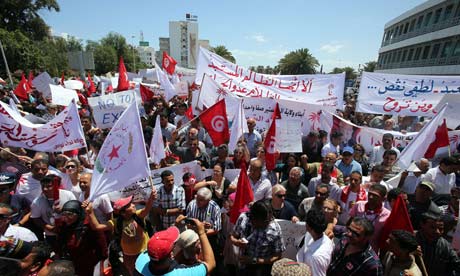

No comments:
Post a Comment